H
ow does fasting affect an
athlete’s performance? The
answer is a complex one,
says Dr Ahmad Munir Che
Muhamed, chairman of National
Coaching Board.
But the topic is important to
Muslim athletes worldwide, he
says, as the 2012 London Olympics
will be held during the fasting
month from July 27 to Aug 12.
“With the London Olympics
2012 being held during the fasting
month, the topic of fasting is of in-
terest to Muslim athletes and the
sports science community. Many
are concerned that Muslim athletes
will be at a disadvantage because
they will fast throughout the event.”
Many coaches and athletes share
the general perception that fasting
will have a negative effect on sports
perform-
ance.
During
Ramadan,
Muslim
athletes
will refrain
from fluid
and food
intake be-
tween the
hours of
sunrise and
sunset,
with an av-
erage fast-
ing period of between 12 and 15
hours, depending on location (lati-
tude) and timing of the month.
The general perception on exer-
cise during Ramadan is that there
will be increased physiological
strain during exercise, reduction in
capacity to perform submaxial ex-
ercise for an extended period of
time, reduction in the cognitive
function and motor control and a
decline in sport performance.
“Athletes are particularly con-
cerned about dehydration which,
even at a mild level, has been
proven to have adverse effects on
their performance,” says Dr Ahmad.
He adds although both athletes
and coaches harboured this nega-
tive perception about fasting affect-
ing an athlete’s performance
negatively, there was little support-
ing scientific evidence so far.
“Various studies have shown that
fasting during Ramadan has no sig-
nificant effect on sports perform-
ance and variables, such as total
energy intake, body composition,
cellular and biochemical properties
of blood.”
Other concerns raised are the
changes in eating habits, sleep pat-
terns, reduction in energy reserves,
timing of testing done and fitness
levels of subjects.
“Not surprisingly both groups
would like to know whether train-
ing intensity can be maintained
with fasting and what health con-
cerns can surface when training or
competing.”
To better tolerate training while
having to fast, he says athletes
should increase their overall physi-
cal conditioning prior to Ramadan,
while coaches should alter the
training programme to accommo-
date the expected changes in the
sleep-wake cycle of the athlete.
In the research of Reilly and Wa-
terhouse (2007) on Circadian
rhythms during Ramadan, athletes
reported having a lower quality
sleep time, which resulted in a de-
crease in the willingness to train.
Ensuring that a fasting athlete
maintains a good nutritional intake
despite the change in meal time is
another important step for coaches
to follow.
As a general rule, eat sahur
(morning) as a lunch portion, iftar
(breaking of fast) as a dinner por-
tion and morae (after tarawih) as
supper. Delay sahur as late as possi-
ble.
—
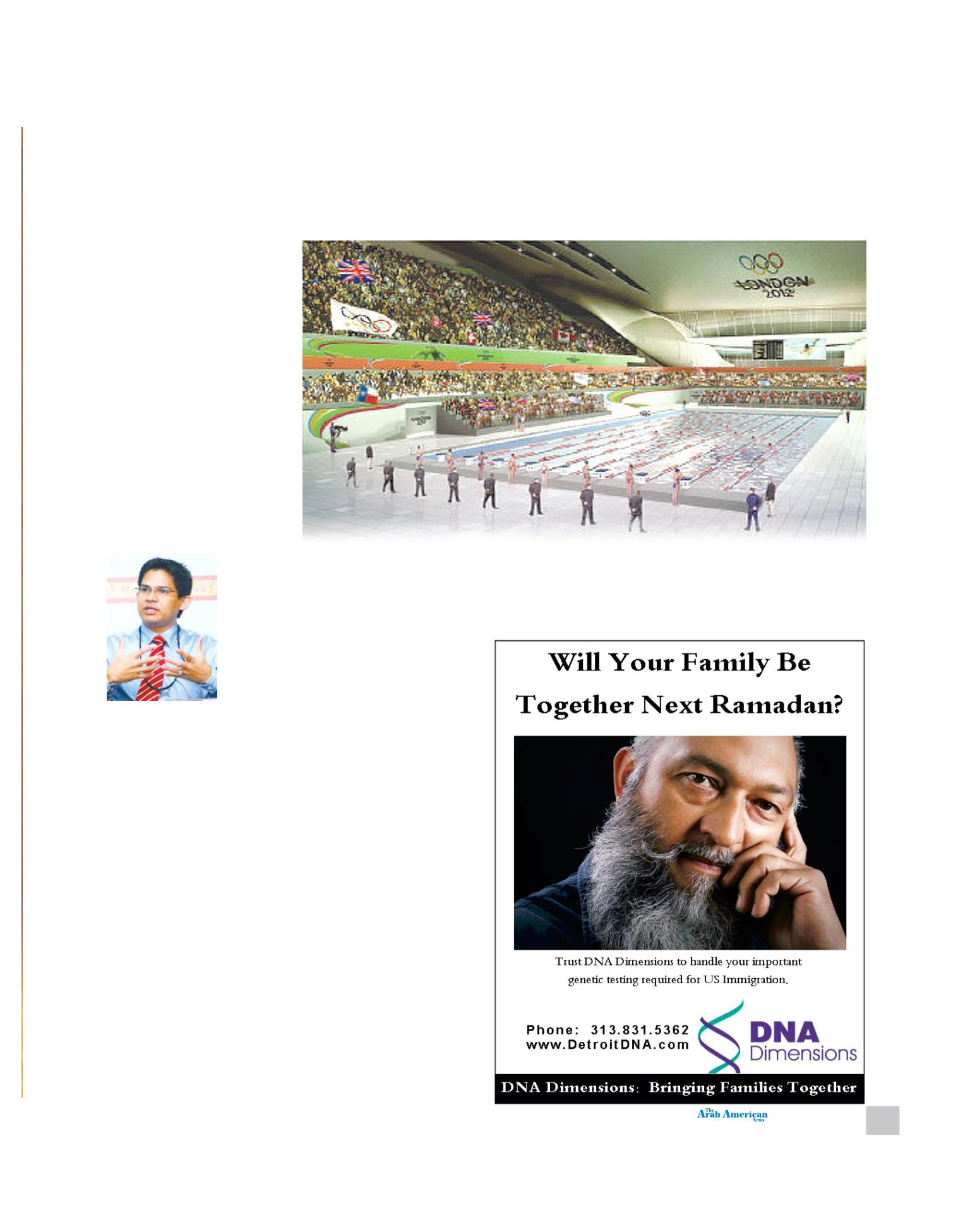
Computer generated image of London’s proposed Olympic Acquatic Centre
2012 Olympics held during Ramadan
The 2012 London Olympics falls during the fasting month and Muslim athletes are concerned about
the effect it will have on their performance.
Dr Ahmad says it’s
important to increase
athlete’s general
conditioning before
Ramadan.
Ramadan
20
10
25


